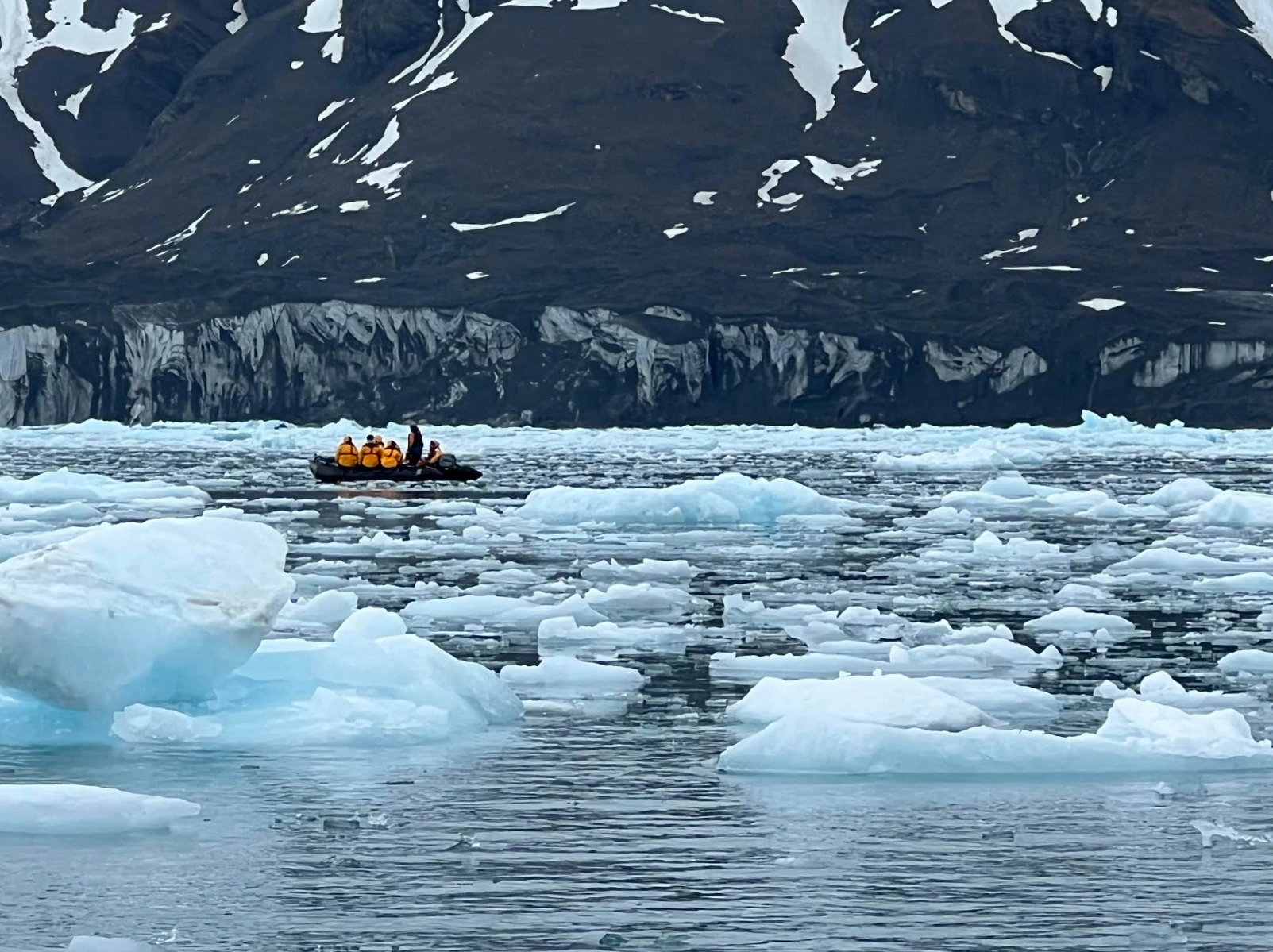
Spitsbergen sits at the outer edge of the High Arctic, where the presence of sea ice, migrating wildlife, and changing polar conditions shapes every decision.
Part of the Svalbard archipelago, this remote Norwegian territory is widely regarded as one of the most wildlife‑dense regions in the Arctic. A circumnavigation of Spitsbergen is not a scenic loop or a sightseeing itinerary. It is an expedition that unfolds in response to ice, weather, and opportunity.
From June 30 to July 14, 2027, Quark Expeditions offers a full Spitsbergen circumnavigation aboard Ultramarine, a purpose‑built polar vessel designed for challenging Arctic conditions and immersive exploration.
Why Spitsbergen is a true High Arctic expedition
Spitsbergen is defined by immediacy and biodiversity rather than by historic narrative.
Polar bears roam the sea‑ice edge. Walrus haul out along remote shorelines. Arctic fox and reindeer traverse the tundra. Seabird colonies fill the cliffs during the summer months. Glaciers calve directly into the ocean, creating dynamic landscapes that change daily.
Because this environment is so active, routes evolve continuously. A circumnavigation allows the expedition team to navigate around the archipelago when ice conditions permit, offering access to multiple fjords, coastlines, and ecological zones. Adaptability is not a compromise here; it is the defining characteristic of authentic High Arctic travel.
Why Quark Expeditions leads expeditions in Svalbard
Spitsbergen requires an operator with deep Arctic expertise and rigorous operational standards.
Quark Expeditions has spent decades navigating High Arctic waters and developing expedition protocols that prioritise safety, environmental protection, and wildlife respect. Expedition leaders, captains, and specialist staff collaborate daily to assess sea ice, wildlife presence, and landing conditions before decisions are made.
Expedition teams typically include Arctic wildlife specialists, marine biologists, glaciologists, polar historians, and highly experienced Zodiac drivers. This collective expertise ensures that wildlife encounters, landings, and Zodiac cruises are conducted responsibly and thoughtfully.
The role of Ultramarine in High Arctic exploration
The success of a Spitsbergen circumnavigation depends heavily on vessel capability.
Ultramarine was designed specifically for polar environments, with a PC6 ice‑class hull, powerful propulsion, and exceptional manoeuvrability in ice‑affected waters. Its expansive Zodiac fleet enables efficient landings and extended wildlife‑focused cruising when access windows are brief or conditions shift.
Open observation decks and panoramic public spaces allow for continual wildlife monitoring, while indoor areas support daily briefings, scientific interpretation, and reflection. When conditions allow, Ultramarine’s helicopters offer an additional perspective on glaciers, ice fields, and Arctic scale that cannot be experienced from sea level alone.
Everything about the ship supports expedition rhythm rather than distracting from it.
Daily life on a Spitsbergen circumnavigation
Days in Svalbard rarely unfold as planned, and that is precisely the appeal.
Mornings may begin with Zodiac cruising along ice edges where polar bears hunt and rest. Landings might take place on tundra slopes, glacial moraines, or historic trapper sites. Wildlife sightings can shift plans instantly, extending time in a single location or redirecting the route entirely.
Evenings bring open expedition recaps, where the team explains what was observed, why certain decisions were made, and how conditions may influence the following day. Learning is constant, contextual, and tied directly to lived experience.
Who this expedition is best suited for
A Spitsbergen circumnavigation aboard Ultramarine is particularly well suited to travellers who:
• are motivated by wildlife and natural behaviour
• value adaptability over certainty
• are comfortable with cold, wind, and extended time outdoors
• enjoy learning through observation and interpretation
• seek immersion rather than passive viewing
For some travellers, this represents a first High Arctic expedition. For others, it complements more complex journeys such as the Northwest Passage. In either case, the experience rewards presence and curiosity.
Expedition details
Spitsbergen Circumnavigation: A Rite of Passage
Operator: Quark Expeditions
Vessel: Ultramarine
Dates:June 30 to July 14, 2027
This expedition operates within a narrow Arctic summer window and capacity is limited.
Host details
A meaningful next step
Spitsbergen offers one of the most concentrated wildlife experiences in the Arctic, but it demands an operator, vessel, and mindset aligned with expedition travel.
If this High Arctic journey resonates with you, I invite you to reach out to discuss suitability, preparation, and expectations.
Email:lisa.watson@onvigo.com
Detailed voyage information and Quark‑branded expedition materials are available on request.